

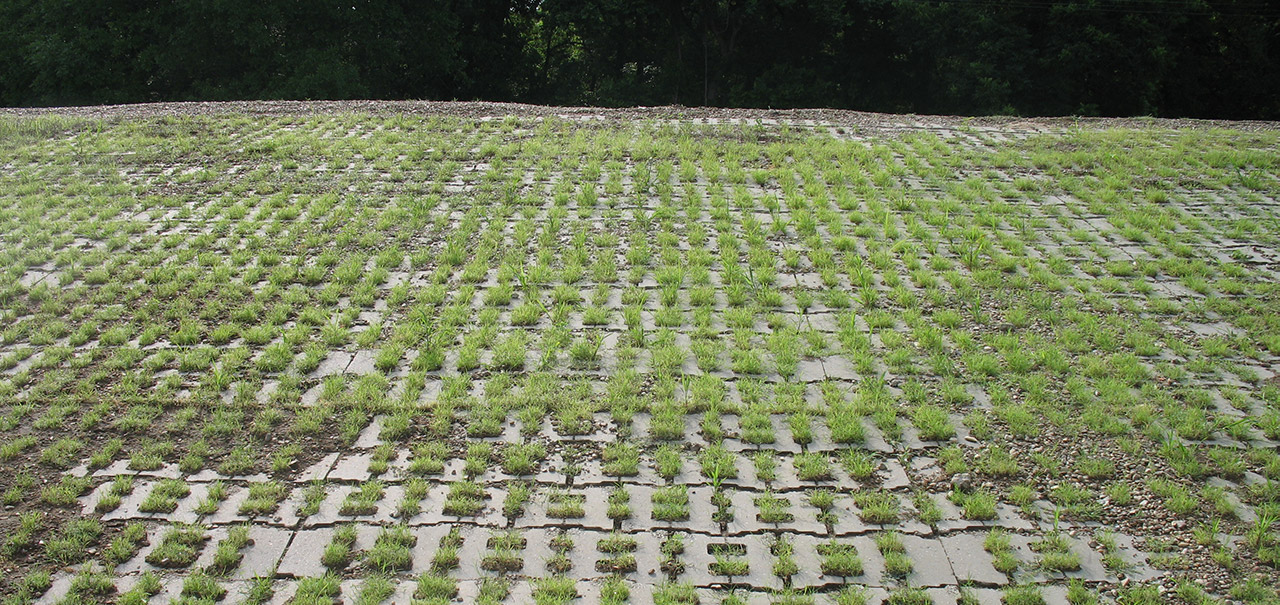
Shoreblock® BD & SD
Concrete Block Erosion Protection
When concentrated flow threatens slopes and drainage infrastructure, the lining needs to match both hydraulic demands and field conditions. R.H. Moore helps Florida project teams evaluate Shoreblock BD and SD concrete block mats, installation access and supporting details.
An Armored Surface With Flexibility
Shoreblock systems use interlocking concrete blocks to protect underlying soil. Their articulated arrangement provides an alternative to evaluating a continuous rigid lining or loose rock alone. Select the complete assembly for the project, including the prepared foundation, filter layer, terminations and transitions.
Engineers & Specifiers
Develop the hydraulic design basis and identify the system configuration and supporting documentation required for review.
Contractors & Estimators
Compare access, lifting requirements, staging, subgrade preparation and installation sequencing before pricing.
Owners & Municipalities
Consider inspection access, long-term upkeep and how the protected surface connects to surrounding assets.
Two Cabled Mat Systems. One Site-Specific Review.
Shoreblock® BD
Concrete block mattresses with cabling in both directions. Explore Shoreblock BD →
Shoreblock® SD
Cabled concrete block mats for engineered erosion protection. Explore Shoreblock SD →
Use this comparison to start the discussion. Product names alone do not establish an allowable velocity, shear stress, slope angle or factor of safety.
Shoreblock® BD
Shoreblock BD uses interlocking concrete units assembled into mattresses with polyester cables running in both directions. Shoretec describes tapered block sides and a notch-and-key connection, with mattress connections that support continuity through the protected area.
Where It Fits
Evaluate BD for engineered revetment applications, including bends and curved layouts where transitions between mattress shapes need careful coordination.
Mat Construction
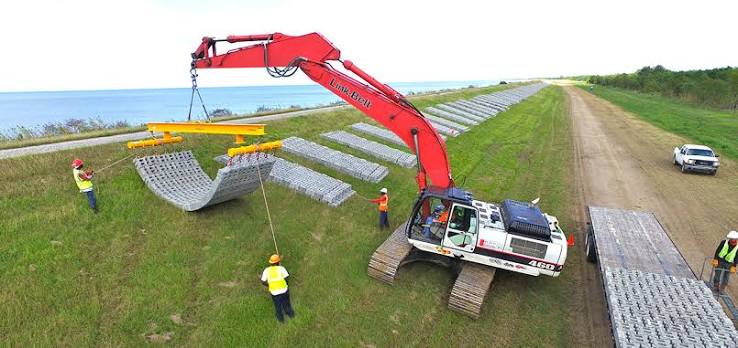
The manufacturer lists 8-foot-wide mats in lengths up to 40 feet. Final dimensions, block selection and connection requirements depend on the project.
What to Review
Check the proposed slope, foundation soils, anchoring and handling requirements. Review BD-specific test data and installation details rather than transferring criteria from another block system.
Shoreblock® SD
Shoreblock SD combines interlocking concrete units into flexible, cabled mats. Shoretec lists applications including auxiliary spillways, levees, diversion berms and dam overtopping protection, subject to engineering evaluation.
Installation Format
The manufacturer describes mats 8 feet wide and up to 40 feet long, with project-specific sizes and connections. Confirm the current available configuration and handling plan.
Surface & Flexibility
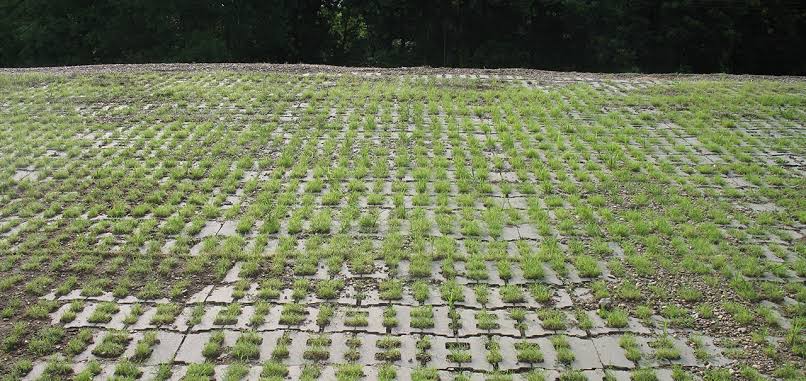
The system provides openings for pressure relief and potential vegetation. Its articulated arrangement can accommodate ground contours within the limits of the selected design.
What to Review
Request SD-specific block data, cable layout, lifting details, filter requirements and hydraulic test documentation. Coordinate mat joints and terminations with the site geometry.
Look Beyond the Concrete Block
Hydraulics & Geometry
Provide flow conditions, anticipated water levels, slope geometry and the limits of protection. Ask the design professional to establish the acceptance criteria.
Foundation & Filtration
Evaluate soil retention and drainage beneath the armor. Coordinate the geotextile or filter design with the actual subgrade and hydraulic conditions.
Edges & Transitions
Show crests, toes, sides, penetrations and connections to other linings. Address potential undermining and flow paths around the protected area.
Construction Access
Identify equipment routes, lifting space, staging and water-control needs. Confirm mat dimensions, lifting arrangements and equipment access before fixing the installation approach.
Submittals & Acceptance
Request drawings and performance information for the exact proposed assembly. Resolve substitutions and required approvals before procurement.
Inspection & Upkeep
Set an inspection plan for the armor, joints, edges and adjacent soil. Identify how damage, displacement and accumulated debris will be addressed.
Bring RHM Into the Review
01 / Share the Conditions
Send the project location, plans, protected area, hydraulic information and access constraints. Identify the specification and decision schedule.
02 / Review the Options
Work with RHM to organize the system comparison and obtain manufacturer documentation for the project engineer’s review.
03 / Coordinate Pricing
Confirm quantities, accepted configuration, delivery access and timing so the quote reflects the planned installation.
Common Questions
Which system should I start with?
Start with the hydraulic requirements and installation constraints. BD and SD both use cabled mats. Review the proposed assembly, access and handling requirements for each. Ask RHM to help organize the comparison for the project engineer.
Are SD and BD interchangeable?
Do not assume they are. Confirm the block, cable arrangement, test basis and installation details for the specified system before proposing a substitution.
Can vegetation grow through the blocks?
Shoretec describes open areas that can support vegetation. Coordinate planting and establishment with the selected configuration and expected site conditions.
Does one published test establish suitability for my site?
No. Have the responsible design professional review the applicable report, tested assembly and project conditions before accepting a system.
What should I send for pricing?
Provide location, drawings, quantities or protected dimensions, preferred system, required submittals, access conditions and delivery timing.
Find the Right Revetment Approach
Bring us the erosion challenge and the available project information. RHM can help clarify product options, coordinate manufacturer resources and develop pricing for the selected scope.