

Get More From the Ground Beneath Your Stormwater System.
Slow-draining soils can limit a pond, pavement or landscape before the rest of the system reaches its potential. Explore GEPS with R.H. Moore to determine whether passive infiltration enhancement is a fit for your Florida project.
Where Is Slow Infiltration Limiting the Site?
GEPS stands for Groundwater Energy-Passive System. Convergent presents it as a subsurface approach to improving moisture distribution and infiltration in existing soils.
Dry Ponds & Infiltration Basins
Evaluate where slow drawdown is limiting the intended function of a basin. Start with observed conditions and the approved drainage design.
Permeable Pavement & Green Infrastructure
Consider the receiving soil beneath a permeable surface or infiltration practice as part of the complete system.
Nuisance Ponding & Landscapes
Investigate recurring wet areas to determine whether infiltration, grading, groundwater or an obstructed outlet is the controlling issue.
A Passive System Installed Below Ground
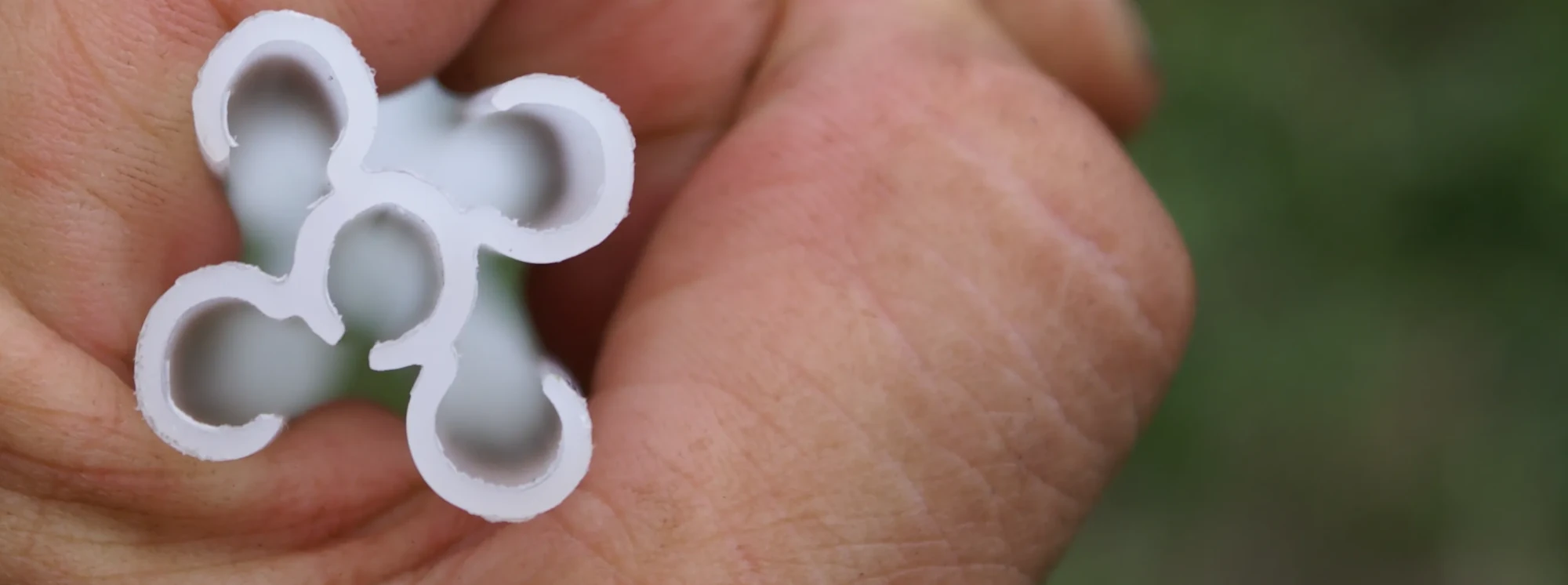
The manufacturer describes GEPS as an artificial-root-like network of polyethylene units placed in drilled holes. It is intended to redistribute moisture through the surrounding soil without powered pumping.
Below the Surface
A designed arrangement places units within the soil profile. Layout and unit selection are part of the manufacturer’s project review.
Without External Power
The operating concept uses passive soil-water processes rather than an electrical pump.
Within a Site Strategy
Evaluate the soil profile and receiving conditions before deciding how GEPS might support a larger drainage or infiltration plan.
See the Product and Installation Context


Improve Infiltration Without Starting With a Larger Footprint
Make Existing Practices Work Harder
Consider whether the underlying soil is constraining an infiltration practice before comparing expansion or reconstruction options.
Preserve Surface Use
Because units are installed below grade, the concept can be evaluated where surface appearance and landscape use matter. Installation still requires access and drilling.
Compare the Complete Cost
Review investigation, layout, installation and verification alongside alternatives. Evaluate site-specific costs rather than assuming a fixed saving.
Convergent describes infiltration gains of up to 10 times native conditions. That is a manufacturer-reported potential, not a rate to insert into every design. Establish the site’s baseline and confirm how proposed performance will be evaluated.
Understand Why the Water Is Not Leaving
Soils & Groundwater
Provide borings, soil descriptions, infiltration testing and seasonal groundwater information. Identify restrictive layers or other conditions that affect feasibility.
Water Source & Quality
Identify the contributing drainage area and runoff characteristics. Discuss treatment and groundwater-protection requirements with the project engineer.
Hydraulic & Physical Constraints
Share basin elevations, observed drawdown, overflow and outlet details, utilities and installation access. Include photographs taken after rainfall.
RHM can help organize a focused review with Convergent. Confirm applicable water management district and local criteria before assigning design credit or changing permitted storage.
A Designed Layout, Installed by a Licensed Team
The published specification requires Exlterra-licensed installers and manufacturer approval of layout changes. It lists 5- to 40-foot GEPS shaft lengths; the selected layout determines which units are used.
Coordinate the Work
Resolve utilities, drilling access and construction sequencing before installation.
Follow the Approved Layout
Coordinate field conflicts with the manufacturer rather than relocating units without review.
Plan Verification
The specification describes an acclimation period influenced by soil and climate. Establish the performance-evaluation timing and documentation before installation.
From a Wet Area to a Defined Evaluation
01 / Share the Problem
Describe where water collects, how long it remains and what use or requirement it affects. Send existing plans and available test data.
02 / Review Suitability
RHM can coordinate manufacturer input on the information needed for a proposed application and layout.
03 / Confirm the Scope
Define investigation, installation, acceptance testing and applicable guarantee terms in the project proposal before proceeding.
GEPS FAQs
Does GEPS use a pump or electricity?
Convergent describes GEPS as a passive system that operates without external power.
Can it be used beneath an existing stormwater practice?
It may be evaluated for an existing facility. Review the approved plans, soil and groundwater conditions, access and cause of poor drawdown first.
Can I assume a tenfold infiltration rate?
No. Manufacturer-reported potential does not establish a site design rate. Agree on testing and acceptance criteria for the actual application.
Does GEPS remove the need for pretreatment?
Evaluate runoff quality and the full treatment train separately. Infiltration enhancement does not, by itself, establish a pollutant-removal credit.
Is routine maintenance required?
The specification states no additional maintenance is required for GEPS units after installation. Associated basins, inlets, pretreatment and landscape still need their normal care.
What guarantee is available?
Convergent advertises a 20-year performance guarantee. Ask RHM to obtain the applicable written scope, conditions and acceptance criteria for your proposed installation.
Can GEPS be used on any Florida site?
Feasibility depends on the subsurface conditions, runoff, installation constraints and applicable requirements. Begin with a site review rather than a blanket assumption of suitability.
Review the Manufacturer Information
Product Overview
Design & Installation
Typical Drawing and Specifications (PDF) →
Manufacturer Technical Guide (PDF) →
Use current manufacturer documents with the project’s engineering and permitting review. Request a site-specific layout and clarification of any criteria that affect the proposed design.
Discuss GEPS With R.H. Moore
Have a basin that will not draw down or an infiltration concept constrained by soil performance? Share the site information and the outcome you need.
Send What You Have
Florida project location, drainage and grading plans, soil and groundwater information, test results, ponding photographs and schedule.
Know the Next Step
We clarify the problem, identify information gaps and coordinate the appropriate manufacturer review before developing a recommendation or pricing request.