

Make Room for Treatment.
Keep Room for the Project.
When stormwater treatment competes with buildings, parking and landscape, a compact biofiltration system can open up design options. Explore FocalPoint with R.H. Moore, your Florida resource for technical guidance and project coordination.
Where Could Biofiltration Fit?
FocalPoint High Performance Modular Biofiltration System (HPMBS) combines engineered treatment media with a modular underdrain. Evaluate it where landscape integration, available treatment area and downstream routing need to work together.
Constrained Development
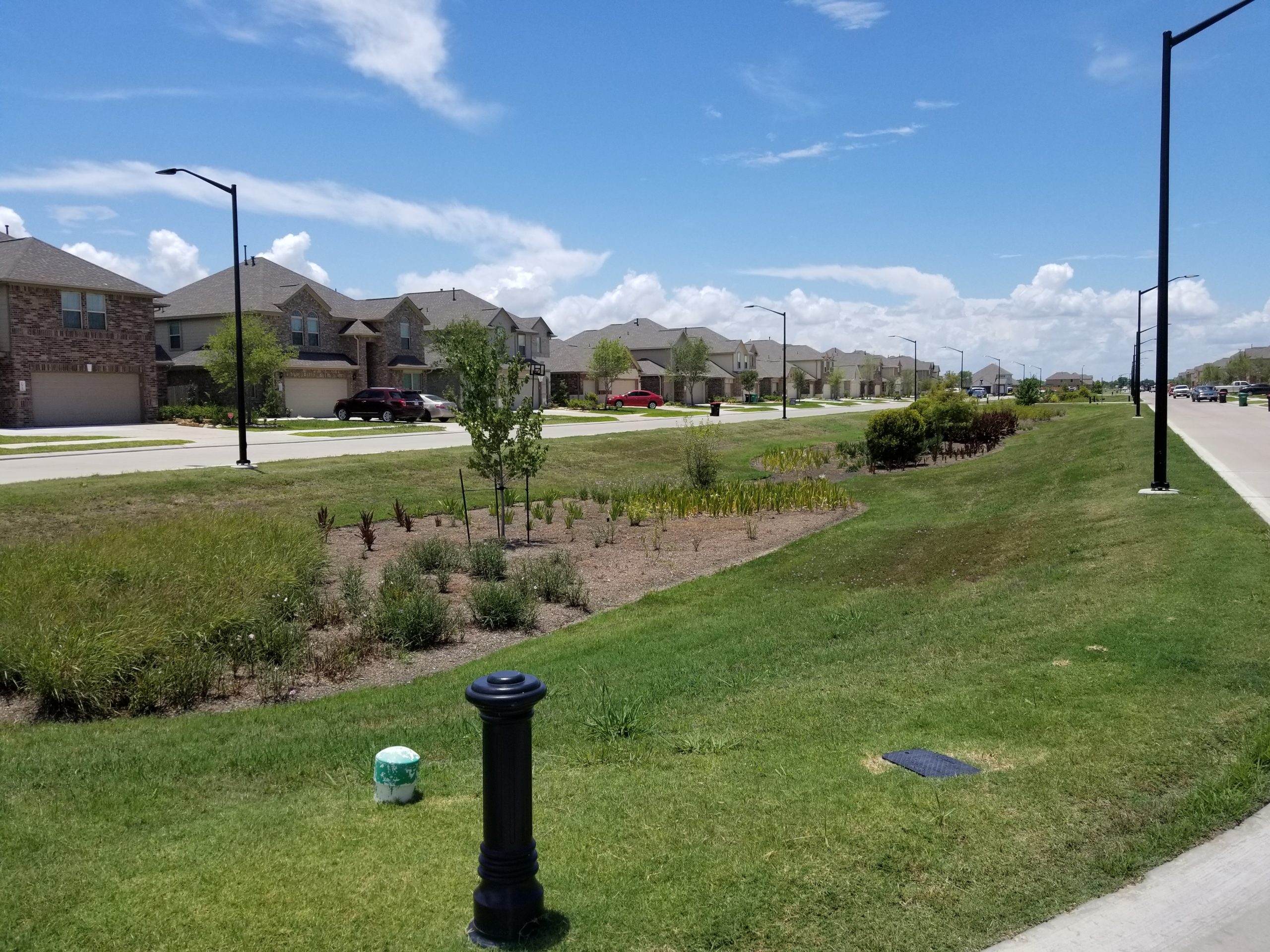
Compare a compact treatment bed with the space available around parking, buildings and access routes. Review the complete drainage layout before deciding how much land can be recovered.
Streetscapes & Redevelopment
Consider treatment within landscaped streetscape areas, planters or retrofit spaces. Existing utilities, tree roots and inlet elevations belong in the early layout discussion.
Connected Stormwater Systems
Evaluate biofiltration alongside storage, infiltration or controlled discharge. Treatment footprint and required storage volume are separate design questions.
A Smaller Treatment Area Can Change the Layout
Use Landscape Purposefully
Make the treatment area part of the landscape plan. Coordinate planting, public visibility and access with the hydraulic design.
Compare Total Installed Cost
Look beyond media price per square foot. Include excavation, hauling, underdrain, drainage connections, site restoration and maintenance access in the comparison.
Build Around the Constraint
Convergent describes a boxless, modular approach that accommodates project-specific layouts. Confirm geometry and construction details with the manufacturer before finalizing the plans.
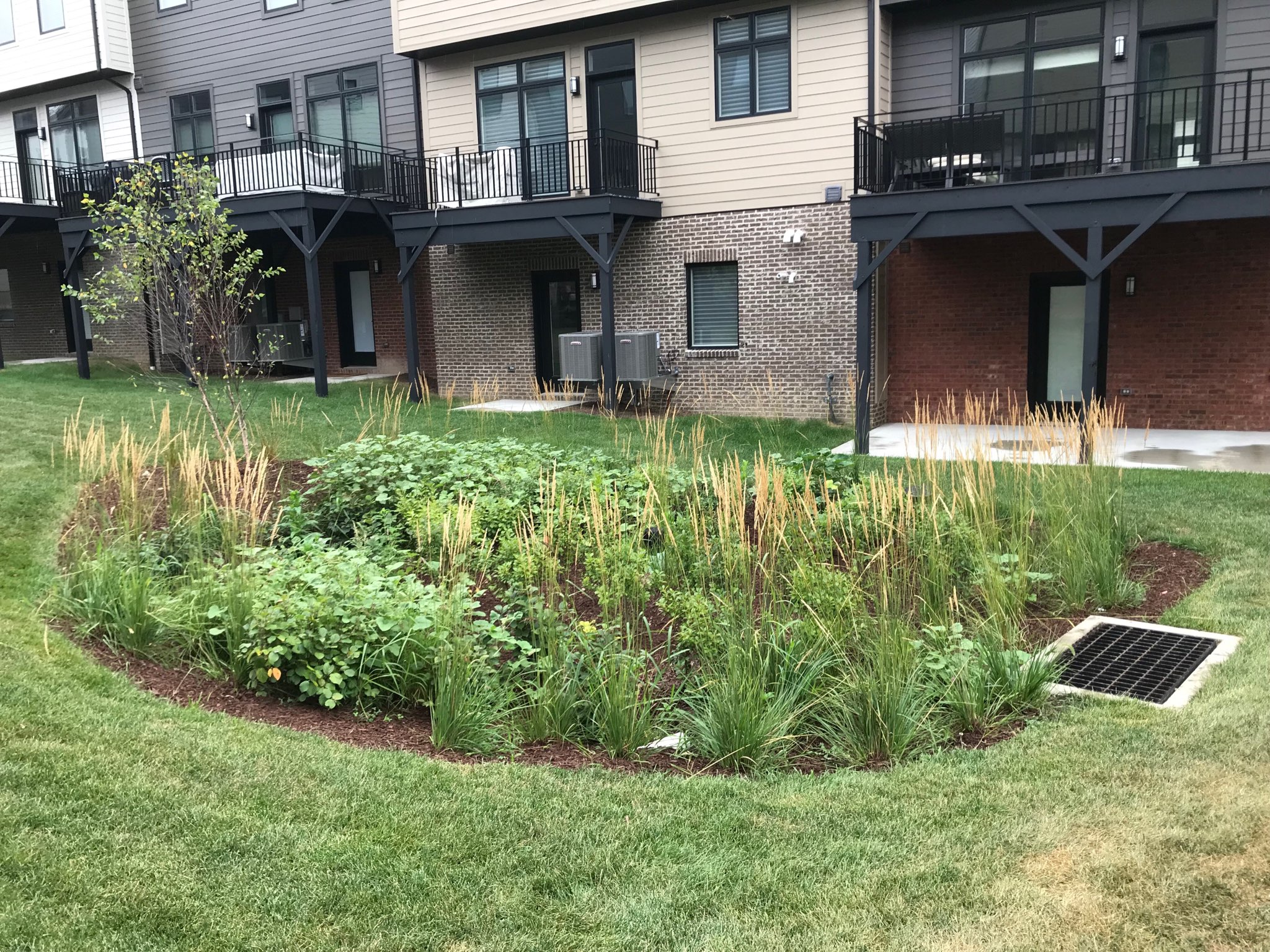
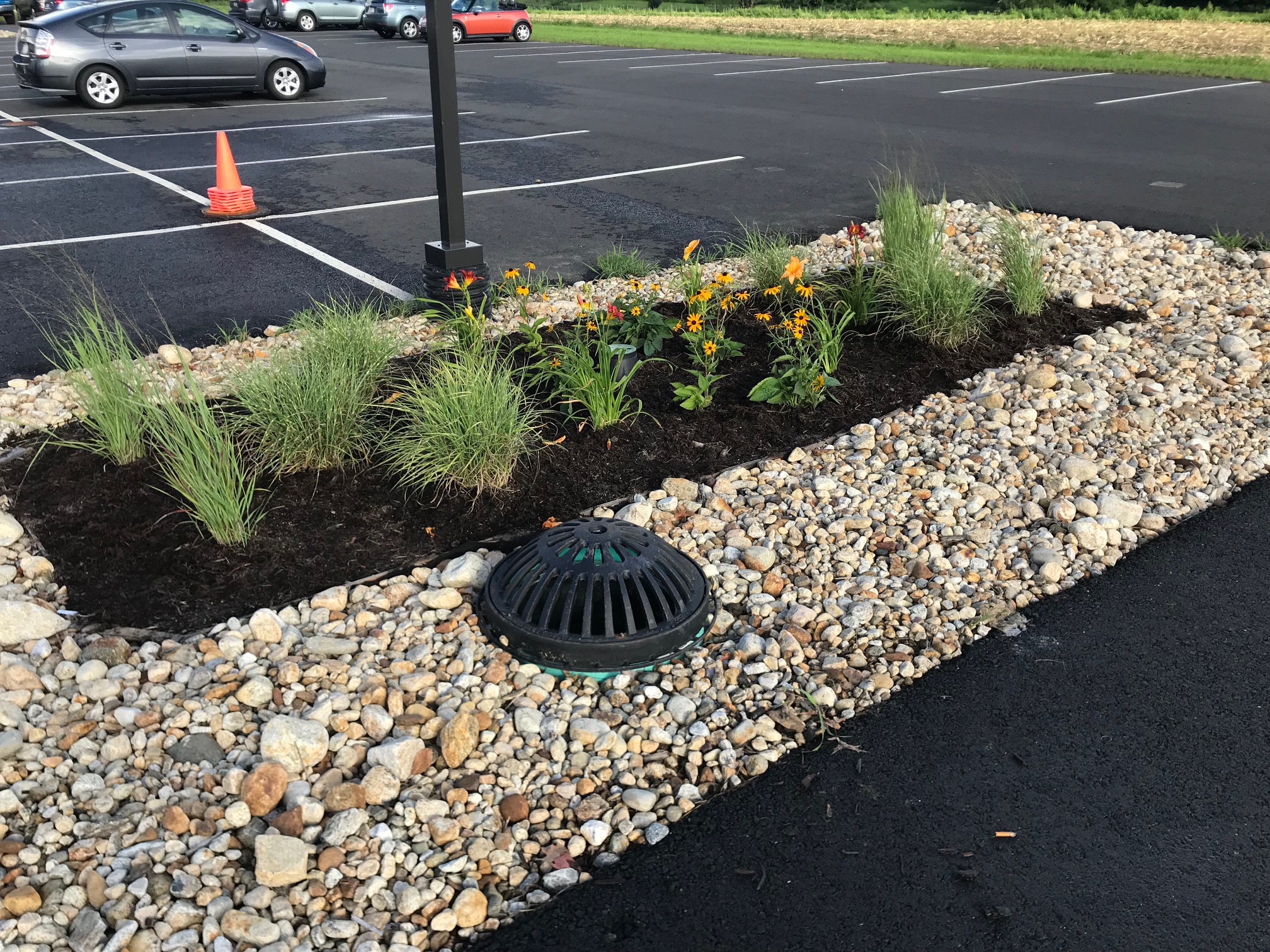
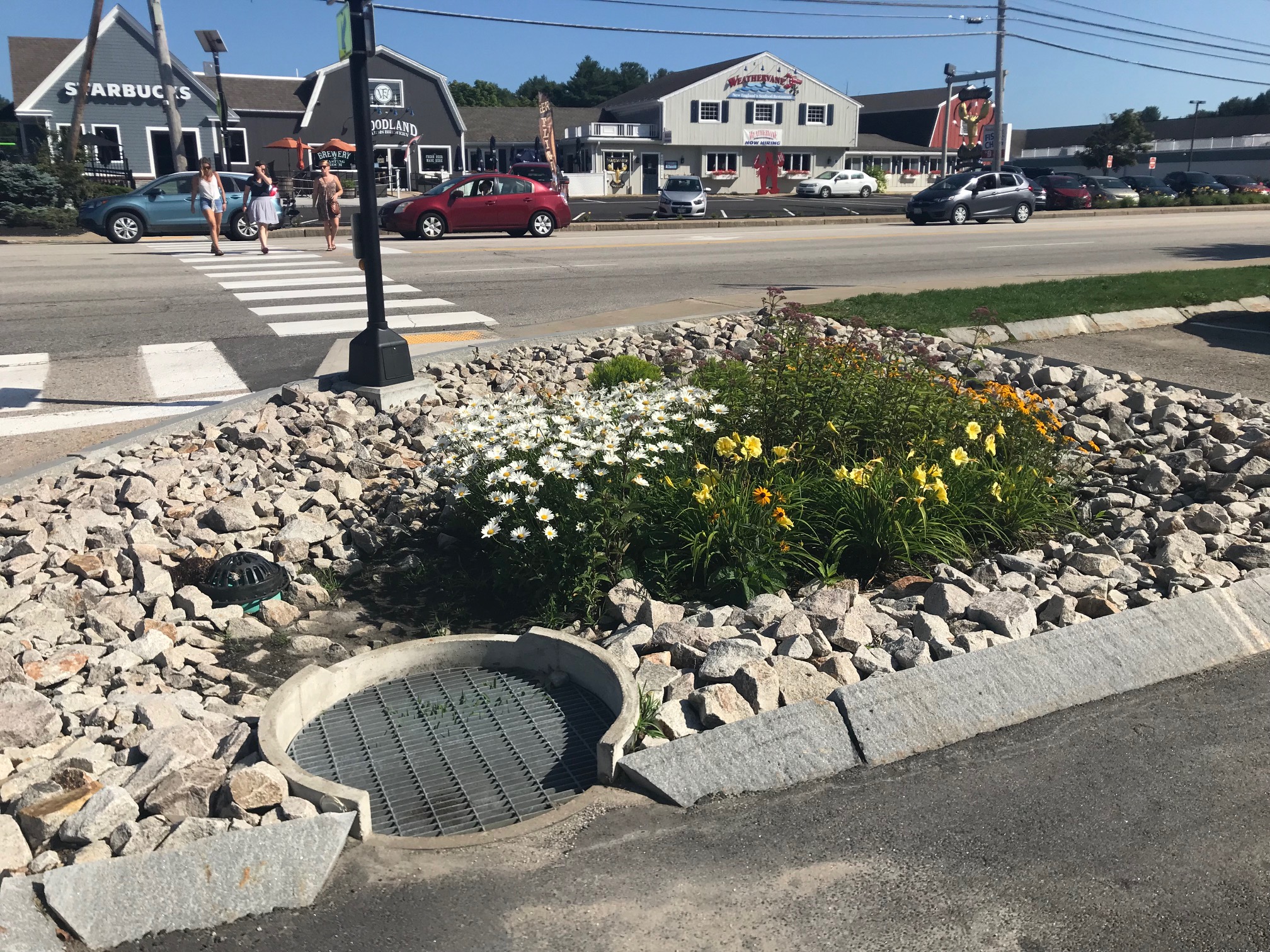

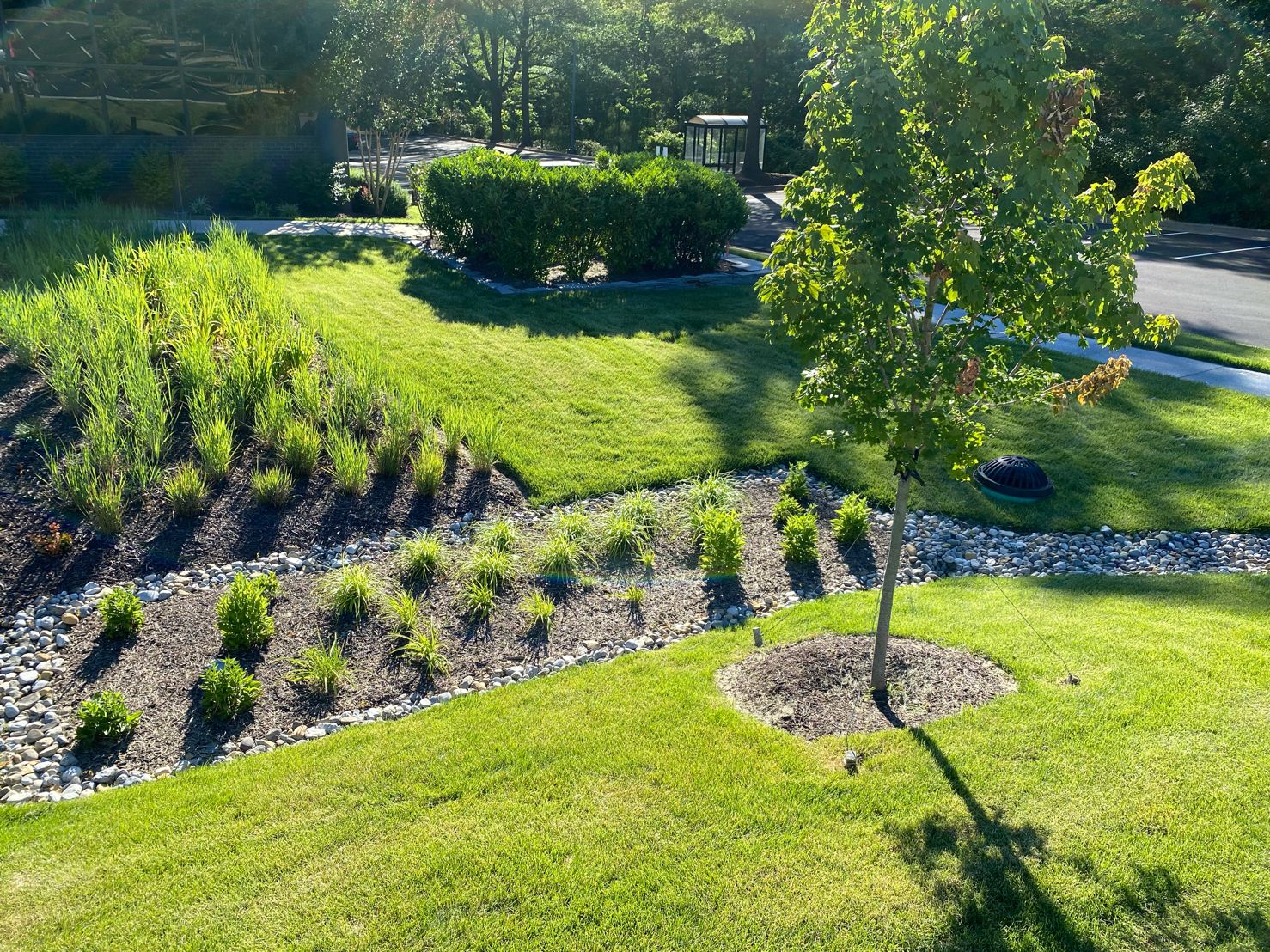
How FocalPoint Works
01 / Collect & Distribute Runoff
Runoff enters through a designed surface connection. Energy dissipation and pretreatment help manage incoming debris and sediment before water reaches the treatment bed.
02 / Filter Through a Living Bed
Vegetation, specified mulch and engineered media form the treatment zone. Physical, chemical and biological processes support pollutant capture as water moves through the bed.
03 / Route Treated Water
A modular underdrain receives filtered water for the designed downstream route. Depending on the approved design, that may include storage, infiltration or discharge. Larger flows use a separately designed bypass.
Compatible Components, Specified Together
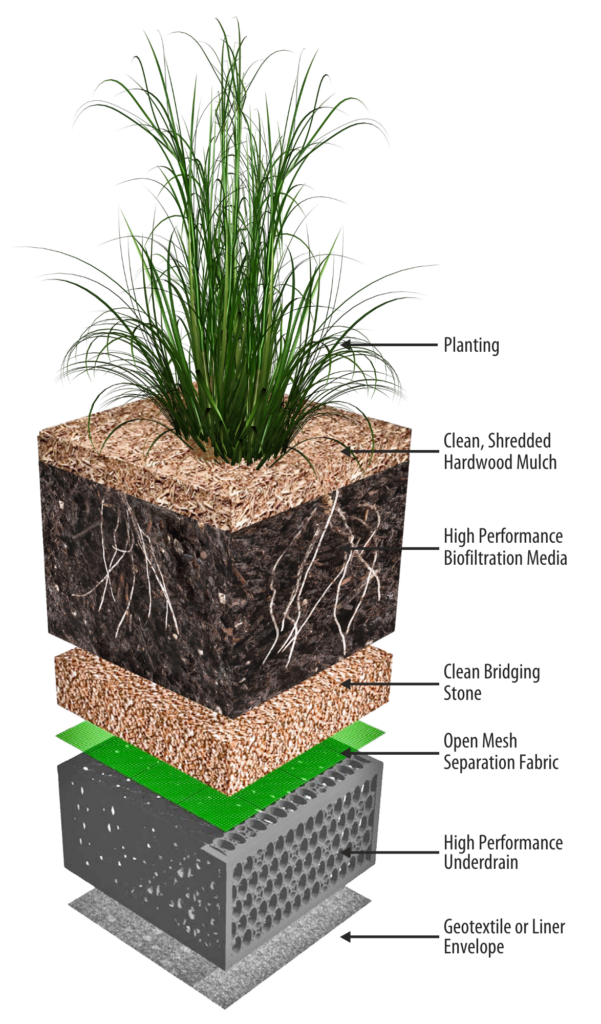
What Each Layer Contributes
- Planting: Integrates vegetation into the treatment environment.
- Specified mulch: Covers the surface and supports the treatment process.
- Biofiltration media: Provides the engineered filtration bed.
- Bridging stone and open mesh: Separate and support the media above the underdrain.
- Modular underdrain: Collects treated flow and can connect with a designed storage or infiltration area.
- Envelope: Geotextile or liner is selected for the intended configuration.
Use the Right Evidence for the Right Requirement
NJDEP / 80% TSS
NJDEP lists FocalPoint HPMBS at an 80% certified total suspended solids removal rate. Review the certification conditions and applicable configuration. Review NJDEP Listings →
Washington / Basic Treatment
The September 2026 designation grants General Use Level Designation for Basic (TSS) Treatment at 1.6 gpm per square foot of media surface area, subject to its conditions. Read the Official GULD →
General Media Specification
Convergent’s standard construction guide specifies a minimum media infiltration rate of 100 inches per hour. A media specification is not interchangeable with an approved system loading rate. Review the Construction Guide →
For a Florida project, identify the applicable water management district and local requirements first. Bring the required treatment criteria to RHM so the proposed configuration and supporting documentation can be reviewed for that site. Out-of-state designations do not establish Florida approval.
Bring the Constraints Into the Design Review
Drainage & Hydraulics
Provide drainage area, impervious cover, required treatment flow or volume, inflow elevations and the receiving system. Include the proposed bypass route and any upstream or downstream storage.
Groundwater & Available Depth
Identify seasonal high groundwater, soils, proposed bottom elevation, outlet invert and utility conflicts. Review infiltration, underdrained or lined configurations against the site requirements.
Access & Long-Term Ownership
Reserve access for construction, inspection and surface maintenance. Identify who will maintain the system and how that responsibility will transfer at project completion.
Use the current manufacturer details for the selected configuration. General planning dimensions and drainage-area ratios are starting points for discussion, not final sizing criteria.
Connect Pretreatment, Biofiltration & the Outlet
A treatment train assigns a clear job to each stage. Review where sediment and debris will collect, how filtered runoff will move onward and how larger events will bypass the bed.
Upstream: Accessible Pretreatment
Discuss an inlet or curbline pretreatment stage, including PRETX or PRETX-LT where appropriate. Match the arrangement to inflow, energy dissipation, cleanout access and the approved system design.
Middle: Engineered Biofiltration
Direct the intended treatment flow through FocalPoint. Protect the media from avoidable sediment loading and keep untreated bypass flow from entering the underdrain directly.
Downstream: A Defined Destination
Coordinate with modular storage, an infiltration area or a permitted outlet. Any detention reduction must follow from the site hydrology and accepted design method.
Choose Plants for the Treatment Environment
Fast-draining media and concentrated stormwater inflow create different conditions from an ordinary landscape bed. Coordinate planting with the landscape architect, manufacturer guidance and local requirements.
Match the Site
Consider hardiness, sunlight, drought tolerance, root form and the available soil depth. Native planting can support the landscape objectives when suited to the treatment conditions.
Support Establishment
Plan watering during installation and dry periods. Coordinate landscape work with system activation so the treatment bed is ready for service.
Protect Long-Term Function
Provide maintenance staff with the approved planting and care requirements. Avoid treating the bed as a convenient location for ordinary soil or mulch substitutions. Read the Planting Guide →
See How Other Teams Used FocalPoint
Bagby Street / Houston, Texas
Biofiltration had to fit within a redesigned streetscape while accommodating street trees. Convergent describes positioning the compact treatment system outside the tree drip zone, preserving room for both functions. Read the Bagby Street Case Study →
Sci High / New Orleans, Louisiana
The school paired two FocalPoint beds with underground detention. Convergent reports treatment surface areas of 110 and 30 square feet, integrated into the campus landscape. Read the School Case Study →
These are Convergent manufacturer case studies outside Florida. They illustrate design approaches; RHM participation and identical results on other sites are not implied.
Protect the System During Construction
Coordinate Before Installation
Review the approved drawings, components, delivery sequence and manufacturer installation requirements with the contractor. Resolve discrepancies before excavation or assembly.
Keep Construction Sediment Out
Schedule installation near site stabilization where practical. If earlier installation is necessary, use the manufacturer’s protection procedure until activation is appropriate.
Complete the Handoff
Coordinate activation, planting, performance verification and owner documentation. Confirm the site-specific scope of installation support and training. Read the Installation Guide →
Accessible Maintenance Is Part of the Design
The manufacturer’s O&M guide describes surface-based maintenance using ordinary landscape tools for the biofiltration bed. Set frequency according to site loading, observed conditions and permit requirements, rather than assuming one schedule fits every installation.
Inspect Flow & Accumulation
Check inlet and bypass openings, sediment buildup, trash, ponding and the surrounding drainage area. Investigate restricted drainage rather than allowing it to persist.
Care for the Treatment Surface
Remove accumulated material, replenish the specified mulch where required and assess plant health. Follow approved procedures for media restoration when needed.
Document the Work
Keep maintenance records and photographs, identify the responsible party and follow reporting requirements. Confirm any included training or maintenance services in the project proposal. Read the O&M Guide →
FocalPoint FAQs
How large does the system need to be?
Size it for the applicable treatment criteria, approved hydraulic loading rate, drainage conditions and selected configuration. Send RHM the preliminary drainage information for a project review.
Is FocalPoint a detention system?
Its primary role is biofiltration. The modular underdrain can be integrated with storage, but required storage and release rates must be evaluated in the overall drainage design.
Can it be used with a shallow groundwater table?
Available depth, groundwater separation, discharge elevations and jurisdiction requirements determine feasibility. Discuss shallow-profile or lined options with RHM and Convergent before specifying them.
Does Washington GULD cover nutrients or metals?
The designation linked here is for Basic (TSS) Treatment. It should not be presented as approval for nutrient or metals treatment. Review separate evidence for any additional pollutant objective.
Can ordinary landscape soil replace the media?
Specify and install the tested system components together. Changes to media or other components require manufacturer and design review.
Is maintenance included?
Ask RHM to confirm the installation support, activation, training and maintenance scope in the proposal. Manufacturer materials describe regional differences; do not assume free maintenance is included.
What determines cost?
Footprint, selected configuration, excavation, delivery, connections and site access all affect installed cost. A project-based quote is more useful than a generic cost per square foot.
Review the Manufacturer Documents
Design & Configuration
System Brochure (PDF) →
Construction Guide (PDF) →
Drawings & Design Resources →
Construction & Care
Installation Guide (PDF) →
Planting Guide (PDF) →
Operations & Maintenance (PDF) →
Treatment Evidence
NJDEP Certification Listings →
Washington Official GULD (PDF) →
Manufacturer System Overview →
Documents open on Convergent or the issuing agency’s website. Confirm the current revision and configuration with RHM before using a detail in construction documents.
Discuss FocalPoint With R.H. Moore
Send a preliminary plan, drainage area, treatment requirements and site constraints. RHM can help organize the next technical discussion with Convergent and develop a project-specific material and pricing request.
What to Send
Project name and Florida location; civil plans; drainage area and calculations; treatment objectives; groundwater and soils information; elevations; available footprint; schedule.
What Happens Next
We review the information with you, identify gaps and coordinate the appropriate manufacturer input. Final sizing, design acceptance and permitting remain part of the project’s engineering review.