

Capture Sediment.
Protect the Water Beyond.
Runoff from paved sites can carry sediment, oils and floating debris into receiving waters. R.H. Moore helps Florida project teams evaluate Downstream Defender treatment, with attention to hydraulic fit, pollutant objectives and long-term service access.
Treatment at a Defined Point in the Drainage Network
Downstream Defender is a hydrodynamic vortex separator for sediment, oils and floatables. It can serve as pretreatment or a stand-alone device when the selected configuration meets the project’s treatment requirements.
Engineers & Specifiers
Define the pollutant targets, treatment flow and acceptance criteria. Review the model and performance evidence together.
Contractors & Estimators
Coordinate structure placement, delivery, lifting and pipe connections with the actual site constraints.
Owners & Municipalities
Make service access and inspection responsibilities part of selection so captured pollutants can be removed.
Vortex Separation With Protected Storage
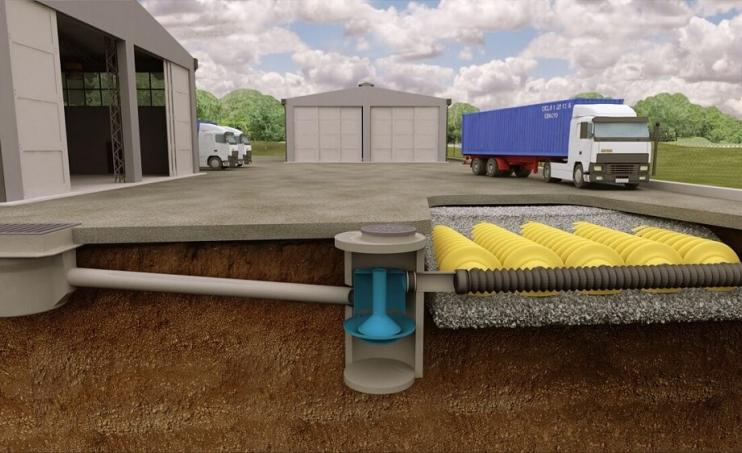
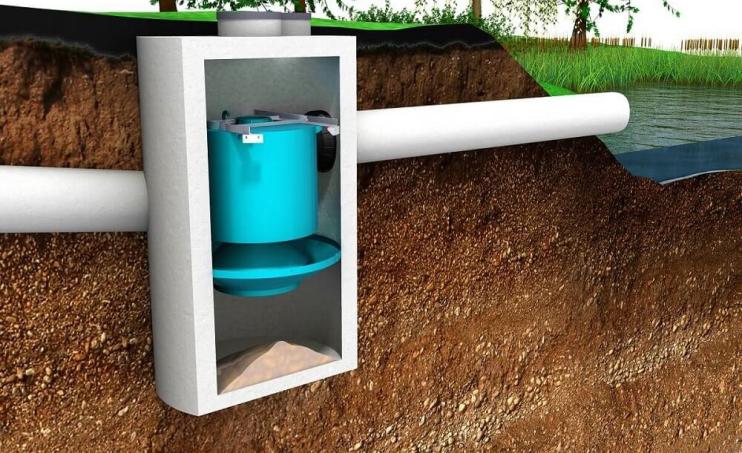
Tangential entry creates rotating flow within the vessel. Internal components direct sediment toward a protected lower storage zone while oils and floatables collect above. Flow then exits from within the dip-plate cylinder.
Controlled Flow Path
The dip plate, benching skirt and central components organize the flow through the vessel.
Separated Storage
The system is designed to isolate collected pollutants from the main flow path and limit washout.
Gravity Operation
Hydro describes operation without a pump. Confirm available head and downstream water levels for the proposed installation.
Understand What Separation Targets
Manufacturer-listed targets include suspended particles, floating trash, hydrocarbons, and nutrients or metals attached to sediment. Particle capture does not establish universal removal of dissolved pollutants.
Sediment & Solids
Identify the particle characteristics relevant to the design. Compare the proposed treatment flow with the applicable test basis.
Oils & Floatables
Review expected loading and storage needs. Establish a practical plan for removal and disposal of collected material.
Additional Treatment
Where dissolved pollutants or other objectives require more treatment, have the design team evaluate the downstream process and connection.
Paved Sites, Roadways & Receiving-Water Protection
Oldcastle identifies highway, parking, industrial and urban runoff applications, as well as control of sediment entering ponds, basins and wetlands.
Development & Redevelopment
Review the footprint and available elevations alongside the required treatment objective.
Transportation & Industrial Sites
Provide drainage plans, expected pollutants, pipe details and any operating constraints affecting installation or service.
Treatment Trains
Coordinate the separator with upstream collection and downstream practices. Review maintenance needs across the entire system.
Review Hydraulics, Connections & Evidence
Treatment & Peak Flow
Define both design conditions and confirm the applicable model ratings. A broad product-range capacity is not a sizing recommendation.
Headloss & Tailwater
Provide pipe inverts, rim elevations and downstream water levels. Resolve hydraulic performance for the actual network.
Pipe Arrangement
Show inlet and outlet sizes and directions. Ask RHM to coordinate proposed orientation changes or multiple-inlet needs with the manufacturer.
Structure & Ground
Identify surface loads, cover, groundwater, utilities and foundation information for the project review.
Standard models are described as on-line units without an internal bypass; an off-line arrangement can use upstream diversion. Have the project engineer confirm the selected layout and larger-event routing.

Review Hydraulics, Connections & Evidence
Treatment & Peak Flow
Define both design conditions and confirm the applicable model ratings. A broad product-range capacity is not a sizing recommendation.
Headloss & Tailwater
Provide pipe inverts, rim elevations and downstream water levels. Resolve hydraulic performance for the actual network.
Pipe Arrangement
Show inlet and outlet sizes and directions. Ask RHM to coordinate proposed orientation changes or multiple-inlet needs with the manufacturer.
Structure & Ground
Identify surface loads, cover, groundwater, utilities and foundation information for the project review.
Standard models are described as on-line units without an internal bypass; an off-line arrangement can use upstream diversion. Have the project engineer confirm the selected layout and larger-event routing.
Use Performance Documentation for the Actual Project
Manufacturer resources list multiple verification and acceptance pathways. Each applies under its own conditions, sizing basis and scope; a listing does not establish blanket approval for a Florida installation.
Request Current Documents
Obtain the report or acceptance documentation describing the proposed model and treatment application.
Check the Conditions
Review test sediment, treatment flow, storage assumptions and other limitations with the responsible professional.
Coordinate Acceptance
Confirm the reviewing authority’s requirements and resolve any additional submittal needs before procurement.
Dearborn Street, Englewood
Hydro’s case study describes Downstream Defender treating excess runoff that bypassed swales in a low-impact development project serving the Dearborn Street neighborhood. The receiving-water objective was protection of Lemon Bay Aquatic Preserve.
Challenge
Provide treatment within a neighborhood infrastructure improvement while working with limited available hydraulic drop.
Approach
Engineers selected Downstream Defender to capture pollutants in the swale overflow route.
Reported Outcome
The manufacturer states that the system fit the low-drop conditions and added treatment where runoff had previously been untreated.
Read Hydro’s Englewood Case Study →
Manufacturer project reference. The supplied source does not establish RHM’s involvement.
Coordinate Installation & Handover
01 / Resolve the Submittal
Confirm selected model, connections, elevations, structural requirements and applicable installation details.
02 / Plan the Work
Coordinate excavation, water management, delivery, lifting and installation access using approved plans and current manufacturer requirements.
03 / Prepare the Owner
Provide the accepted drawings and current inspection and maintenance instructions. Identify access points and responsible personnel.
Remove What the System Captures
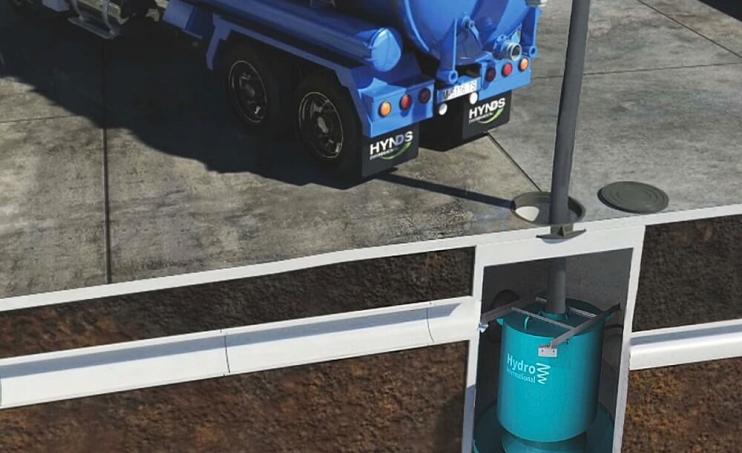
Captured material needs a service plan. Request current model-specific maintenance instructions and confirm how crews and equipment will reach the installation.
Inspection
Establish inspection intervals and cleaning triggers based on the manufacturer instructions, loading and project requirements.
Working Access
Show access covers, equipment approach and any work-zone constraints on the site plan.
Records & Follow-Up
Document loading, cleaning and component condition. Use observations to refine scheduling and address repair needs.
Downstream Defender FAQs
Does Downstream Defender need a pump?
The manufacturer describes gravity operation without a pump. The project still needs adequate hydraulic conditions for the selected layout.
Can it be used as pretreatment?
Yes, the manufacturer describes pretreatment and stand-alone uses. Acceptance depends on the treatment objective and applicable project requirements.
Does sediment capture remove all nutrients and metals?
No. The manufacturer identifies sediment-bound nutrients and metals as targets. Do not equate these with universal dissolved-pollutant removal.
Can the outlet change direction?
The manufacturer describes adaptable outlet orientation. Provide the proposed pipe arrangement for model-specific review.
What about an off-line layout?
Hydro describes an upstream diversion for off-line use. Have the engineer coordinate treatment and larger-event flows with the selected design.
What information is needed for pricing?
Send the Florida location, drainage plans, flows, elevations, pipe geometry, pollutant objectives, required submittals and delivery schedule.
Get the Details for Your Review
North American Resources
Additional Manufacturer Information
Ask RHM to coordinate current model data, drawings, performance documentation and service instructions for the proposed installation.
Discuss Downstream Defender With R.H. Moore
Share the runoff challenge and available project information. RHM can help organize the product review, coordinate manufacturer resources and develop pricing for the selected scope.